
Over the past few decades, the rise in digestive disorders linked to the consumption of grain products, particularly wheat, has raised many questions about gluten and how it affects digestive health. However, research is increasingly exploring whether fermentation processes could help improve bread digestibility and nutritional value.
Léa Ribet, a scientist at the Lesaffre, sheds light on the subject. Drawing on a review of the scientific literature conducted in collaboration with other scientists and researchers from the University of Helsinki and University College Cork.
Are digestive disorders really associated with bread and gluten?
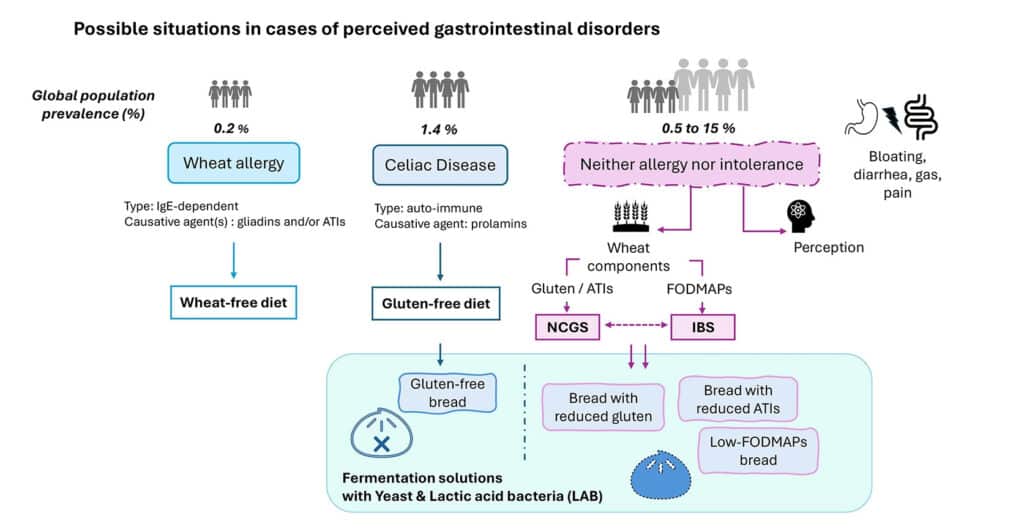
Yes, there are various digestive disorders that may be associated with the consumption of bread and, more broadly, wheat or gluten. We mainly distinguish three categories of disorders: celiac disease, wheat allergy and non-celiac wheat or gluten sensitivity.
However, recent scientific findings indicate that gluten isn’t always the primary trigger.
What Causes These Digestive Disorders?
These three conditions are based on different mechanisms and do not involve the same dietary patterns.
First, celiac disease is an autoimmune disorder triggered by gluten consumption in genetically predisposed individuals. Ingesting gluten triggers an immune response that causes inflammation and damages the lining of the small intestine. In this case, gluten must be strictly excluded from the diet.
Wheat allergy, on the other hand, is an immune system reaction to certain wheat proteins, such as gliadins or alpha-amylase-trypsin inhibitors (ATIs). This allergy affects only 0.2% of the population and is more common in children but can persist into adulthood. In this case, wheat must be excluded, but not necessarily all sources of gluten.
Finally, people with non-celiac wheat or gluten sensitivity experience intestinal symptoms even though neither celiac disease nor wheat allergy has been diagnosed. These symptoms vary across populations and are still poorly understood by science. Symptoms may be linked to gluten or ATIs, but the primary suspect is likely FODMAPs (fermentable oligosaccharides, disaccharides, monosaccharides and polyols).
Surprisingly, recent research has also shown the influence of perception on this sensitivity to wheat. This is known as the nocebo effect, as opposed to the placebo effect. In short, people who consume gluten while believing it is bad for their health may experience actual symptoms.
Can fermentation improve bread digestibility for non-celiac sensitive individuals?
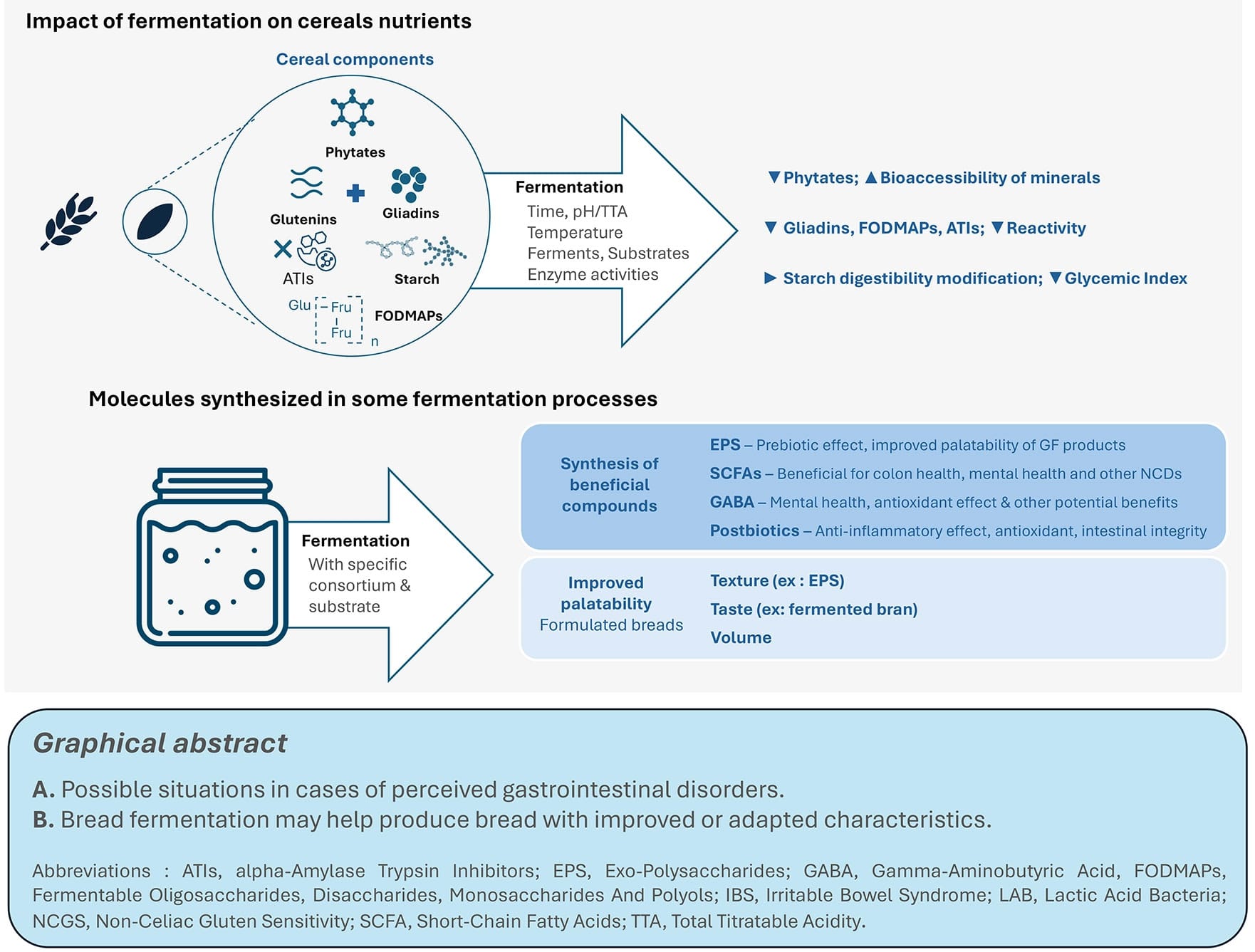
Through fermentation, the digestibility of bread may be improved for this population. Several studies show that it is possible to significantly reduce FODMAPs using carefully selected microorganisms. This could make bread easier to digest for people with sensitivities.
Regarding gluten, the situation is more nuanced. In certain very specific cases, strains of lactic acid bacteria have shown an ability to break down certain gluten fragments involved in the immune response. However, the observed effect stems primarily from the acidification of the dough, which activates enzymes naturally present in the flour (wheat proteases). This is therefore a combined effect of wheat enzymes, microbial enzymes and a decrease in pH.
It is important to note that this solution may be suitable for people with gluten sensitivity but not for those with celiac disease, as it reduces gluten without eliminating it entirely.
For those with sensitivity, there is no single type of bread that is universally better tolerated. The best approach is testing different bread recipes to identify which are best tolerated.
What are the nutritional benefits of bread?
Bread has sometimes been viewed negatively in recent years due to its carbohydrate content. However, eating high-quality bread made from minimally refined flours can fit perfectly into a healthy, balanced diet.
Breads made from whole-grain flours are a source of fibre and minerals such as iron, magnesium, zinc and phosphorus. They also contain antinutritional factors, such as phytates. However, sourdough fermentation helps limit this effect.
Some studies suggest that, under specific conditions, sourdough may promote the formation of resistant starch, particularly during the staling process. Resistant starch acts as a dietary fibre.
Fermentation also plays a key role in sensory quality. Whole-grain or gluten-free breads are sometimes perceived as denser, firmer or slightly bitter. The use of sourdough improves the aroma, flavour and texture of bread and helps limit the addition of additives, particularly in certain gluten-free breads.
How could fermentation further enhance the nutritional benefits of bread?
Fermentation is also being studied for its ability to generate new molecules with potential benefits for human health. It is now well established that our gut microbiota plays an important role in health and is influenced by our diet.
The prebiotics we consume, including fibres that can be fermented by microorganisms in our gut, nourish our microbiota, which in turn synthesises molecules that may benefit health, such as short-chain fatty acids and peptides.
These beneficial molecules can, in some cases, be directly present in bread thanks to fermentation combined with the right choice of substrate. In our review, we found various examples of molecules obtained through fermentation in bread.
The challenge now is to better understand how fermentation processes can be optimised to enhance the production of these beneficial compounds.
Do you know about the different types of fibres found in bread?
Whole-grain bread is known for being high in fibres. However, not all fibres play the same role in the body. There are two main categories, each of which contributes differently to digestive and metabolic health:
- Insoluble fibres help maintain regular bowel movements and can be fermented by gut microorganisms, leading to the production of short-chain fatty acids that promote gut and metabolic health.
- Soluble fibres, on the other hand, form gels in the digestive tract, slowing digestion and nutrient absorption, which can help regulate blood sugar levels and increase satiety. Many soluble fibres are also fermentable, which contributes to the beneficial effects on the microbiota.
Together, these mechanisms highlight the potential of well-formulated fermented whole-grain bread as a daily source of prebiotic substrates.